
Welcome to Our Orchard
We’re bringing apples back. Yes, Apples!
Yes! Apples proudly represents a collective of small, family-run orchards across upstate New York, home to some of the nations best-tasting apples.
Our mission is to turn apples from a long-forgotten fruit into one you remember and ask for by name—because ours are truly one of a kind.
Every day, we work to make it easier for you to experience your best apple yet: one grown with purpose, handled with care, and bursting with unmistakably bold New York flavor.
There might be 99 other apples in the room, but all it takes is one Yes! to turn your day around.
From us to you, thanks for picking up a few!
🏃🍎🗽,
The Yes! Family
Our Family Tree
- Kaari StannardPresident & Owner

- John CushingSenior Vice President

- Matt WellsVice President of Operations & Food Safety

- Debbie BradleyAccount Executive

- Michael HarwoodSales Representative

- Andrea DonofrioController

- Francesca TrombettaCreative Director, Brand & Digital Marketing

- Katelyn WeaverMarketing & Sales Specialist

- Chelsea Van Acker GowanFood Safety & Grower Relations Manager

- Michael MesslerProduction & Logistics Manager

- Lynda SenecalAccounting Specialist

- Mark CallahanLogistics Coordinator

- Jim TerwilligerQuality Assurance & Food Safety

- Lisa BolsterQuality Assurance

- Cassandra Lepore, RDNNutrition Partner
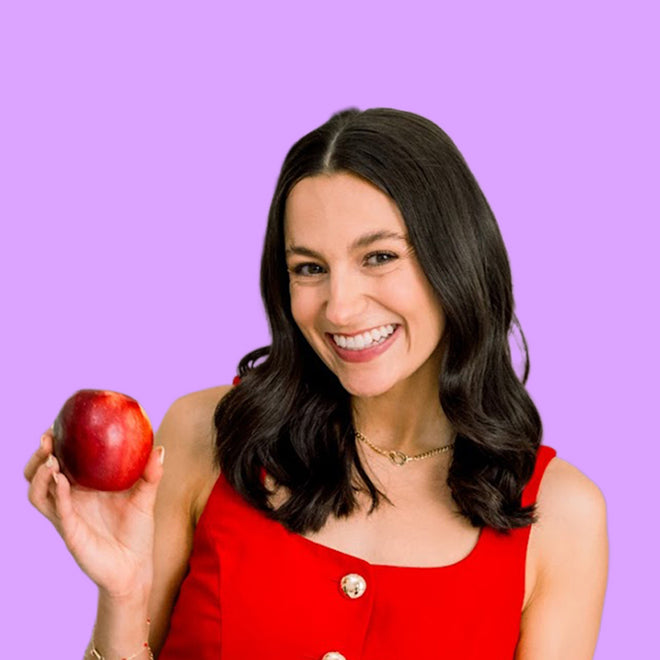


Nobody grows apples like New York.
Since 1919, we've stood side-by-side with New York's family farmers—stewards of some of the country’s most cherished orchards and proof that staying small is a superpower.
With generations of know-how and a gift for perfect timing, they pick every apple at exactly the right moment—so each one reaches you crisp, juicy, and bursting with flavor.

A team that snacks smarter, not harder.
From solar-powered orchards to controlled atmosphere storage and next-gen packaging, we’re rethinking how our apples find you from the orchard-up.
Frequently Asked Questions
-
trigger icon
How can I keep my apples fresh?
It's easy to keep your apples tasting orchard-fresh for up to 8 weeks! Follow these simple steps:
- Refrigerate your apples! When properly refrigerated, apples can last between 6-8 weeks.
- Store apples separately from other produce.
- Toss apple slices in lemon juice to prevent browning. Pro tip: choose slow-to-brown varieties like Ambrosia, EverCrisp®, and SnapDragon® so you can cut ahead and save time!
-
trigger icon
Should I wash my apples?
Washing apples before eating is always recommended—it’s the best way to remove any dust, dirt, or residues from the skin. That said, washing right before you store them can actually shorten their shelf life, because it removes the apple’s natural protective layer and can introduce extra moisture that speeds up spoilage.
The best approach: store apples unwashed in the fridge and give them a good rinse under cool running water before you snack, slice, or cook with them. That way, you get the longest storage life and the cleanest crunch.
-
trigger icon
Where can I find Yes! Apples?
We’re proud to sell Yes! Apples at retailers across the country. Click here to find your favorite stores!
-
trigger icon
My local grocery store doesn’t carry Yes! Apples. How can I change this?
That’s the worst news we’ve heard all day! Let’s change that for you.
Simply make a request to stock Yes! Apples to a store manager or customer service clerk, and feel free to let us know that you want a certain store to carry our juicy apples at hi@yesapples.com or @yesapples. -
trigger icon
What are your sustainability practices?
Yes! Apples and our grower partners have a major shared value–we work with Mother Nature, not against her. We do so by:
- Reinvesting in efficient packing facilities and energy-saving equipment.
- Improving labor efficiencies in orchards to reduce impact on the soil.
- Minimizing the use of pesticides by replanting with dwarfing trees at closer planting density.
- Increasing the use of harvesting and work platforms that are easier on the environment.
- Swapping out plastic for corrugated packaging made from recycled content as often as possible.
- Streamlining shipping logistics to reduce fuel consumption.
- Investing in ways to reduce the amount of packaging and disposable materials used in every aspect of our product.
-
trigger icon
Are Yes! Apples organic?
The short answer? No.
We grow our apples in a unique region in New York that has an extremely wet climate. As a result, it is difficult to grow organic produce because pests love wet weather. Instead, we give a “light touch” when it comes to pesticides and fungicides to protect our apples.
We work with crop consultants and use research from Cornell University to help us integrate pest management effectively into our growing practices so we can use the least amount of pesticides as possible, while still making sure we follow all state and federal regulations.
-
trigger icon
Are your apples GMO?
Nope! No GMO apples are grown in NY state. All of our cross-breeding (for example, SnapDragon®) is done through natural processes, conventional cross-breeding (crossing together plants with relevant characteristics and selecting the offspring with the desired combination of characteristics), or by working with professional agricultural breeders.
-
trigger icon
Why is there wax on my apples?
Our apples are coated post-harvest in a natural, food-grade wax that is safe to ingest. We follow all USDA guidelines when processing apples and this is an industry standard practice!
This mimics the natural wax that apples produce while still on the branch, which is no longer produced once they’re harvested. Wax coating protects apples in transit and prevents damage as they are handled in a grocery store.
Wax has an inherently waterproof nature, so it doesn’t always wash off with water alone. Some consumers scrape the wax off, but that is personal preference—it is edible and tasteless!
-
trigger icon
What's the deal with Apeel?
We have received many questions regarding Apeel™ and would like to provide more information regarding this product.
Yes! Apples does not use Apeel Sciences' Edipeel coating on our products. Our apples are coated with either food-grade shellac or vegetable wax, depending on which orchard they were picked and packed at. This is a safe practice that follows USDA regulations and is industry standard. Apples are coated with wax to maintain freshness while in transit and on grocery store shelves, which are usually not refrigerated.
To further educate consumers, we'd like to provide additional information about Apeel Sciences' Edipeel coating. First and foremost, the best source of information regarding this coating is www.apeel.com. Edipeel is a plant-based coating (think: an additional peel) that is made from mono- and diglycerides that have been derived from plant oils to mimic the natural protection already existing on fruits and vegetables. The plant oils (mono- and diglycerides) found in Edipeel undergo a purification process that eliminates allergens and impurities through heat and distillation.
Apeel Sciences and Edipeel are not the same as the UK-based cleaning product company that is also named Apeel. As stated on the Apeel Sciences website, "Our ingredients are non-toxic, completely safe and made of food grade ingredients designed to be edible. Credible news sources have fact checked this and we urge you to read these if you’ve got more questions on this unfortunate conflation." For more research, please refer to AP News, Reuters, and USA Today.
-
trigger icon
Why is the flesh of my apple red?
Don't fret—pink and red flesh in apples is completely natural! These apples are safe to eat and taste just as great as those with yellow-white flesh.
Many apple varieties (like McIntosh and SweeTango®) have a pink-red flesh because of the pigments in the apple's red skin. This pigment, known as anthocyanin, can "bleed" into the flesh of the apple as a result of light exposure, temperature, and soil pH, among other factors.
Anthocyanin is found in many blue, red, and purple fruits and vegetables. These pigments have potent antioxidant properties and a number of health benefits:
- Reduced inflammation
- Reduced risk of disease
- Improved brain health
- Reduced signs of aging
For more information, we recommend this article.
-
trigger icon
How do you protect the bees?
Bees are our BFFs. They are vital to everything we do when it comes to growing the perfect apple. We do everything we can to keep bees safe and healthy, including:
- No spraying during pollination and bloom.
- Growers and consultants pay attention to bee health.
- Some growers set aside special bee habitats on the farm.
- Limit or not use pesticides that are toxic to bees.
-
trigger icon
Can I pick my own apples?
We pride ourselves on picking and packing the best-tasting apples you’ve ever had. That means you’ll need to leave the heavy lifting (picking) to us. If you would like to pick your own apples during the Fall harvest, take a look at these fine farms.
-
trigger icon
What does family-farmed mean?
Family means everything to us. Whether it’s supporting family farms or our very own Yes! Apples family, our business is rooted in doing what’s best for the apples we’re sharing with your family.
To us, "family farm" means the owners of the farm work directly on the farm in the day to day operations—and many of these farms are multi-generational! By saying "Yes!" to these family farms, we’re supporting the legacy of the apple industry and laying the groundwork for future generations.
-
trigger icon
Do you sell your apples at farmer’s markets?
We love farmer’s markets, and while our apples are picked by our farmers, they are sold in retail stores. If you’re looking for a farmer’s market or pick-your-own apples, you can find some great resources here.
-
trigger icon
Do you perform food safety audits?
We are committed to providing only safe, exceptional fresh fruit that exceeds our customers’ expectations. Here’s why you can trust every bite of a Yes! Apple:
- All of our growers and packing facilities receive third-party food safety audits benchmarked by the Global Food Safety Initiative.
- All audits are proactive, preventative programs, based on hazard analysis of each facility.
- Continuously review and update our food safety practices by investing in new technologies, equipment, staff training (and re-training), and facility enhancements.
- Stringent procedures in-effect throughout entire supply chain.
- Full-time, experienced food safety and quality assurance coordinators on staff.
- Traceability back to individual packing sheds to ensure transparency.
Have a different question?
Let us know below and we’ll be in touch ASAP.
Grown in NY, Enjoyed Everywhere
Yes! Apples are better when shared. Join the conversation at @yesapples!